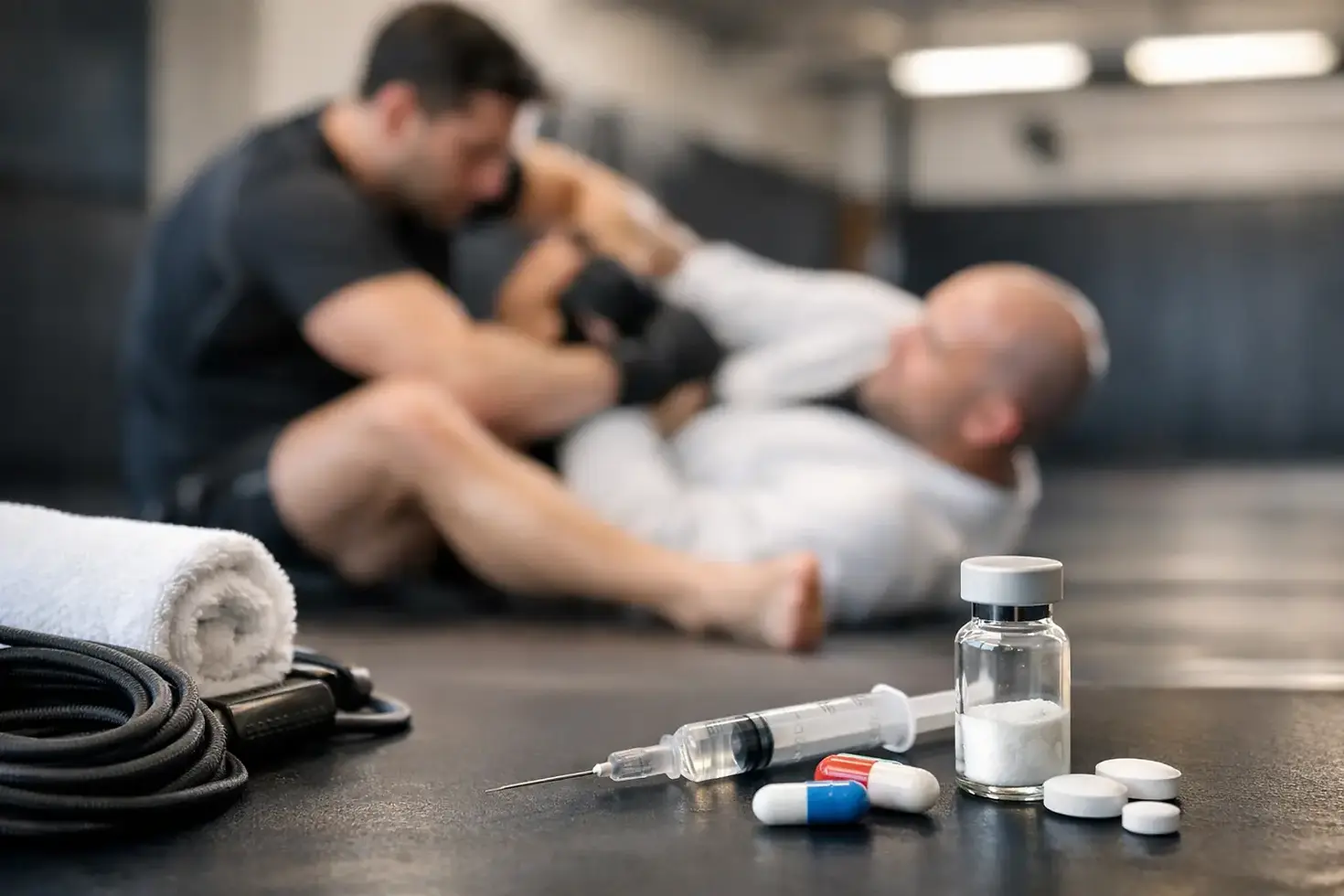
Sports Peptides for Smarter Grappling Recovery
The difference between a productive hard week and a forced week off is often decided after the round ends. Your elbows ache from hand fighting, your neck is tight from wrestling exchanges, and tomorrow still has drilling, lifting, and conditioning on the calendar. That is why sports peptides have become a serious topic among committed grapplers. But a peptide is not a magic reset button, and treating it like one can cost an athlete far more than a missed session.
For Brazilian Jiu-Jitsu athletes, wrestlers, and MMA competitors, recovery is a performance system. Sleep, nutrition, intelligent programming, mobility, stress management, and medical care set the foundation. Peptides may be discussed within that larger system, but the decision requires more discipline than hype.
What Sports Peptides Actually Are
Peptides are short chains of amino acids that can act as signaling molecules in the body. They are not one category with one outcome. Some are studied for tissue signaling, some influence metabolic pathways, and others affect hormone-related activity. Their mechanisms, evidence, risks, legal status, and appropriate medical uses can be dramatically different.
That distinction matters on the mats. A grappler looking for help with a cranky shoulder is not necessarily evaluating the same compound or the same risk profile as an athlete focused on body composition, energy output, or a medically diagnosed condition. “Peptide therapy” sounds broad and performance-focused, but the details determine whether a conversation is credible.
BPC-157 is frequently discussed in recovery circles because of preclinical research and anecdotal reports related to soft-tissue recovery. However, human clinical evidence remains limited, and it is not an FDA-approved treatment for sports injuries. MOTS-C is often positioned around metabolic function and endurance-related conversations, but much of the excitement is ahead of definitive human performance data. Tesamorelin is a prescription medication with a specific approved medical use, not a general-purpose athletic recovery product.
That does not mean every peptide conversation is worthless. It means a serious athlete separates biological possibility from proven athletic outcome. The desire to roll more often is understandable. The standard for deciding what enters your body should still be high.
Why Grapplers Pay Attention to Recovery Compounds
Grappling creates a unique kind of accumulated fatigue. It is not just muscle soreness after a clean strength session. It is the repeated tension of grips, the compression of scrambles, the rotational stress of takedowns, and the small strains that may not stop practice today but can compound over a season.
The athlete who trains four to six days per week often runs into a readiness problem. They can technically attend class, but their pace drops, their reactions slow, and their joints begin dictating how they roll. At that point, recovery becomes a competitive advantage. Better recovery capacity can support better training consistency, and consistency is where technical progress compounds.
Sports peptides attract attention because they appear to offer a more targeted route than standard supplementation. That appeal is real, especially when an athlete is frustrated by a plateau. Still, the right question is not, “What is everyone taking?” It is, “What problem am I trying to solve, what evidence supports this option, and what am I risking in the process?”
If poor sleep, under-fueling, excessive sparring volume, or a poorly managed injury is driving the problem, no compound can make the underlying issue disappear. It may even encourage an athlete to train through a warning sign that deserves evaluation.
Recovery Claims Need a Higher Standard
Combat athletes are used to hard work, which can make bold promises especially tempting. A claim about faster recovery, stronger tendons, improved endurance, or better body composition may sound like the missing piece between good training and elite output. The reality is more conditional.
Research quality matters. Animal studies, cell studies, individual testimonials, and controlled human trials do not carry the same weight. A black belt’s experience may be meaningful to that athlete, but it cannot predict your response, account for your health history, or establish long-term safety.
Product quality also matters, but it answers only part of the question. Every-batch laboratory testing and purity documentation are valuable quality signals when they are specific, current, and tied to the actual lot. They do not prove that a compound is safe for you, appropriate for your goal, medically indicated, or permitted in competition.
For injectable products, the stakes are higher. Identity, concentration, contamination, sterility, storage, handling, and administration all affect risk. A label and a marketing promise are not substitutes for qualified medical guidance. Athletes considering any hormone-active or injectable compound should speak with a licensed clinician who understands sports medicine and their personal medical history.
Sports Peptides and Competition Eligibility
The most disciplined recovery plan is useless if it creates a failed test or threatens your ability to compete. Many peptides and related substances are prohibited under anti-doping rules, including categories covering non-approved substances and peptide hormones. Prohibited status can change, and rules can vary by organization, event, and level of competition.
Do not assume a compound is acceptable because it is discussed openly online, sold as a research product, or used by recreational athletes. Those facts have no bearing on eligibility. “I did not know” is not a reliable defense under strict-liability anti-doping policies.
Before using any peptide, check the current rules of your governing organization and consult a qualified anti-doping resource or sports medicine professional. If you compete in IBJJF events, wrestling, MMA, collegiate athletics, or tested strength sports, treat this step as non-negotiable. Your competition future is part of your training investment.
Build the Recovery Base Before Chasing the Edge
The best athletes do not confuse intensity with recklessness. They build capacity deliberately. That starts with enough calories and protein to match training demands, hydration that is consistent rather than reactive, and sleep that supports actual recovery instead of merely surviving the workweek.
It also means organizing training with intent. Not every round needs to be a war. Technical rounds, positional work, controlled sparring, and planned deloads allow you to build skill without turning every session into a recovery debt. Strength work should make your joints and positions more resilient, not compete with your hardest mat days for resources.
When pain changes your movement, lingers beyond normal training soreness, causes weakness, or affects sleep, get it assessed. A competent clinician can help distinguish between expected fatigue, a manageable overuse issue, and an injury that needs a real plan. That is not backing down. It is protecting the training career you are trying to build.
A Disciplined Decision Framework
If you are evaluating peptides, bring the same focus you bring to competition prep. Start with the goal. Be specific: Is the issue recovery between high-volume weeks, recurring pain, body composition, energy, or a diagnosed medical concern? Vague goals invite vague decisions.
Next, assess the evidence and the downside. Ask whether quality human data exists for your intended outcome, whether a clinician would consider it appropriate for your health profile, and whether it is allowed in your competitive setting. Consider interactions with medications, hormone-sensitive conditions, cardiovascular risk, and any history that could change the equation.
Finally, protect the basics. Track sleep, training load, pain levels, mood, resting heart rate if you use it, and on-mat readiness. Objective notes keep you from assigning every good or bad week to a single intervention. They also make it easier to recognize when more training is not the answer.
Elite performance is not built by collecting shortcuts. It is built by making fewer careless decisions than the people standing across from you. Stay curious, verify every claim, protect your eligibility, and make recovery choices that keep you capable of showing up when the hard rounds matter most.


Comments