How to Manage Elbow Stress From Armbars Safely
An armbar does not need to end in a loud pop to compromise your next week of training. The more common problem is quieter: a tight, tender elbow after hard rounds, discomfort at full extension, or a lingering sense that your arm is one bad scramble away from trouble. Learning to manage elbow stress from armbars is part of training like a serious grappler, not a concession to getting older or rolling soft.
The elbow is a small joint asked to absorb a lot in Brazilian Jiu-Jitsu. Armbars apply leverage across the elbow while opponents are pulling, rotating, bridging, and trying to finish before you create an escape. Add heavy grips, posting during takedowns, wrestling, lifting, and daily drilling, and small irritation can accumulate fast. The goal is not to avoid hard training. It is to make intelligent decisions early enough that you can keep showing up.
Why Armbars Create So Much Elbow Stress
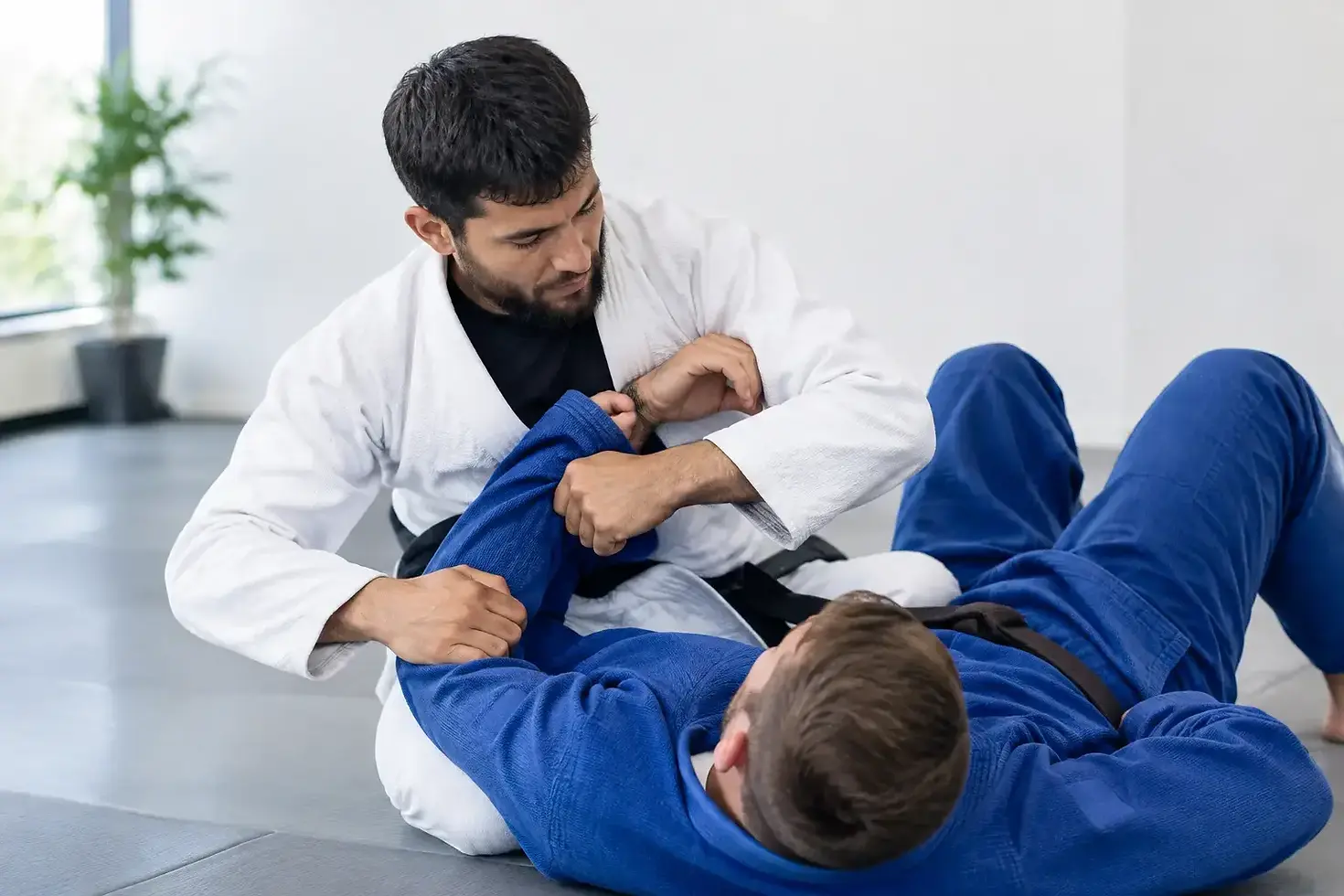
A properly applied armbar attacks elbow extension, but the position is rarely as clean as it looks in a demonstration. Your arm may be bent, your shoulder may be rotated, and your hand may be trapped in a grip while force is applied through the hips. That combination can load the joint capsule, tendons, ligaments, and surrounding muscles in different ways.
The problem is often not one submission. It is volume plus timing. A competitor who taps late in five live rounds, then spends the next day gripping hard during pull-ups and deadlifts, is asking irritated tissue to absorb another shift before it has settled down. High-level durability comes from respecting that cumulative load.
Your body position matters too. When you defend an armbar with panic strength, you may be trying to curl, pull, and rotate against the finish at the same time. Sometimes that buys an escape. Sometimes it simply transfers more force into an elbow that is already close to its limit.
Tap Before the Position Is Finished
The cleanest way to manage elbow stress from armbars is also the least glamorous: tap earlier. Not when your elbow is fully extended. Not when you feel the first sharp pull. Tap when the position is secured and your defense is no longer structurally sound.
This is not an argument for weak habits. It is an argument for accurate risk assessment. There is a major difference between fighting a loose armbar during the transition and gambling with a locked elbow because you do not want to give up the round. Competitive grapplers understand that a training-room tap can protect an entire training block.
Build a clear personal rule: if your opponent has controlled your thumb line, isolated your shoulder, and has their hips positioned to extend your arm, do not wait for pain to confirm what the position already tells you. Reset, learn why the defense failed, and make the adjustment on the next rep.
Partners matter here. Train with people who release pressure when you tap and who apply submissions with control in drilling. You should offer the same standard. A room where athletes can train hard without treating every armbar as a test of toughness will produce more consistent mat time over the long term.
Improve Your Armbar Defense Before the Finish
The highest-value armbar defense usually happens before your elbow becomes the fulcrum. Once the hips are tight, the legs are controlled, and your posture is broken, your options shrink quickly.
Start with elbow position. Keeping your elbow close to your ribs makes it harder for an opponent to separate your arm and align it across their hips. From top positions, do not leave extended arms on the mat or reach far beyond your base unless you have a clear reason. From guard exchanges, recognize when an opponent is climbing their legs high on your shoulder line and address it before they turn the corner.
Grip awareness also protects the elbow. A stubborn sleeve, collar, or wrist grip can trap your arm while your body tries to move in another direction. If the grip is becoming the anchor for an armbar, prioritize clearing it instead of trying to muscle through the transition.
Drill late-stage escapes with a trusted partner at controlled intensity, but do not turn every repetition into a maximal resistance contest. Technical reps teach alignment, posture, and hand fighting. Hard reps test whether those habits hold under pressure. Both have a place, but they should not be confused.
Adjust Training Load When the Elbow Is Talking
A sore elbow is not always an injury, but it is always information. Dull stiffness that improves as you warm up may call for smart load management. Sharp pain, swelling, loss of range of motion, instability, numbness, tingling, or pain that persists at rest deserves prompt evaluation by a qualified sports medicine professional.
For mild irritation, reduce the inputs that clearly aggravate it for several sessions. That may mean fewer hard rounds starting from armbar-heavy positions, less aggressive grip fighting, or replacing high-volume pulling work with lower-stress conditioning. You do not necessarily need to disappear from the academy. You may need to train with a narrower mission for a week.
Communicate with your coach and training partners. A simple statement such as, “My right elbow is irritated, so I am tapping early and avoiding hard extensions,” makes training safer without turning the session into a negotiation. Disciplined athletes manage variables. They do not hide damage until it becomes a forced layoff.
Sleep, nutrition, hydration, and total stress also influence how well you tolerate training volume. Recovery is not one purchase or one rest day. It is the system that allows hard work to compound. For grapplers building demanding schedules, treating recovery as a performance category is often the difference between a strong season and a cycle of preventable interruptions.
Build Strength Around the Joint, Not Through Pain
Elbow resilience is not built by repeatedly testing a sore joint. It is built through gradual, tolerable loading and better control across the shoulder, forearm, and wrist.
Prioritize strength work that supports your normal training demands: controlled pulling, pressing that does not provoke symptoms, forearm rotation, wrist flexion and extension, and grip work performed without chasing pain. Slow, moderate-load movements can be useful when they are tolerated, particularly for athletes who feel weak or unstable after irritation. The exact exercise selection depends on where you feel symptoms and what movements trigger them.
Do not ignore the shoulder. Poor shoulder control can leave the arm exposed and make you more likely to post, reach, or defend with bad alignment. Scapular stability, rotator cuff work, and controlled pressing and rowing patterns can improve the platform your elbow relies on during scrambles.
Progress in small steps. If a drill, lift, or grip exercise creates sharp pain during training or a noticeable flare-up the next day, the dose was too high. Reduce range, resistance, volume, or frequency before building back. The athletes who stay durable are rarely the ones who force a perfect program. They are the ones who adjust quickly and keep accumulating productive work.
Know When to Stop Guessing
Do not self-manage a serious armbar injury. Seek medical assessment promptly if you felt a pop, cannot fully bend or straighten the elbow, see significant swelling or bruising, experience numbness or weakness in the hand, or feel the joint giving way. These signs can point to more than routine post-training soreness.
Even without a dramatic moment, get help when symptoms fail to improve after a reasonable reduction in training load or keep returning every time you roll hard. A clinician who understands combat sports can help distinguish a manageable overload issue from a problem that needs a more structured return-to-training plan.
Your elbow is not a disposable part of the game. Tap with discipline, defend earlier, train the supporting structures, and let your recovery cycle match the workload you demand from yourself. That is how serious grapplers protect their longevity while continuing to chase the next level.


Comments