
How to Support Grip Recovery for Better Rounds
A dead grip changes the entire round. Your frames get loose, your collar ties lose authority, and the submission you normally finish becomes a scramble you cannot control. Knowing how to support grip recovery is not about chasing a bigger forearm pump. It is about restoring the hands, wrists, and elbows so you can keep showing up with reliable control.
For serious grapplers, grip fatigue is rarely caused by one hard roll. It builds through gi rounds, no-gi hand fighting, wrestling shots, lifting, keyboard work, poor sleep, and the habit of training through every warning sign. The solution is not always more grip work. Often, it is smarter loading and a recovery system disciplined enough to protect your next week of training.
Why Grip Recovery Matters on the Mats
Your grip is a chain, not just a hand. Finger flexors, forearm muscles, wrist stabilizers, tendons, elbows, shoulders, and even your upper back all contribute to the ability to control an opponent. If one link is overloaded, the hand may feel weak even when your overall strength is high.
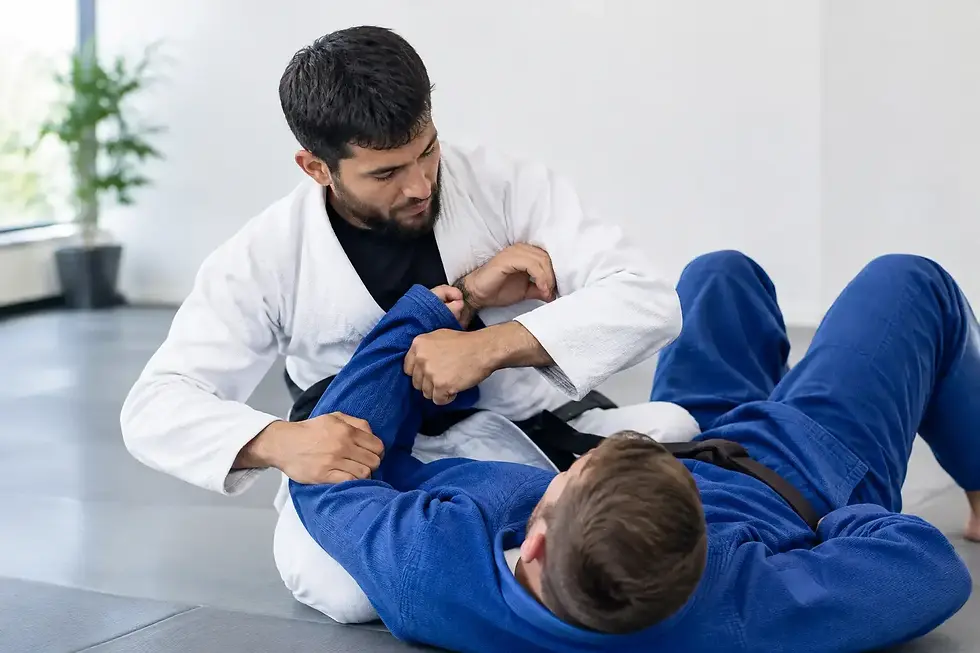
Gi athletes see this constantly. A few heavy sessions of sleeve fighting, lapel retention, and death-gripping can leave the flexor side of the forearm tight and the elbow irritated. Wrestlers and MMA athletes may feel it more through hand fighting, pummeling, wrist control, and repeated impact. The sport differs, but the recovery problem is familiar: accumulated stress outpaces tissue readiness.
A better grip recovery process protects training consistency. That matters more than crushing one isolated grip workout, then spending the next several days unable to close your hand comfortably around a bar or collar.
How to Support Grip Recovery Between Sessions
Start by matching your recovery work to what actually created the fatigue. If your hands are generally tired after hard rounds but not painful, light movement, food, hydration, and sleep may be enough. If you have a sharp, localized ache at the elbow, pain when gripping, or symptoms that worsen each session, the answer is not simply to push harder. Reduce the aggravating work and get assessed by a qualified sports medicine professional or physical therapist.
Reduce the Load Before You Lose the Week
The fastest way to turn manageable fatigue into a stubborn problem is to stack high-grip days without a plan. You may roll hard in the gi Monday, deadlift Tuesday, climb Wednesday, then wonder why your fingers feel useless Thursday. The work is productive individually, but the combined load can be excessive.
Create separation between your most demanding grip exposures when possible. A heavy gi sparring day can be followed by lower-grip conditioning, technical drilling with a lighter hold, or lower-body strength work that does not require maximal bar control. You do not need to eliminate pulling movements. You need enough room for adaptation.
A practical rule: when your grip quality drops enough to change your mechanics, cut the volume before you force ugly reps. If you are compensating with a bent wrist, shrugging through pulls, or holding every grip at maximum tension, you are practicing positions that may tax the wrong tissues.
Use Active Recovery, Not More Fatigue
After training, easy movement can help your hands and forearms feel less locked up. Open and close the fingers through a full comfortable range, rotate the wrists, and move the elbows and shoulders without forcing an intense stretch. The goal is circulation and motion, not a painful mobility test.
Extensor work deserves a place in most grapplers' weekly routine because the sport heavily favors gripping and flexion. Rubber-band finger extensions, light wrist extensions, and controlled reverse curls can help balance the volume. Keep the effort submaximal. If your forearms are already smoked, a hard finisher is just more training stress wearing a recovery label.
Soft-tissue work can also feel useful, especially after gi-heavy sessions. A ball, roller, or your opposite hand can provide brief relief around the forearm muscles. Be cautious around sensitive tendon attachments near the elbow. Aggressively digging into a painful spot is not toughness, and it is not a substitute for changing the workload that caused the irritation.
Restore the Inputs That Actually Drive Recovery
Grip recovery is influenced by the same fundamentals that support every other athletic adaptation. Underfueling is common among combat athletes who are managing bodyweight, training multiple times per day, or simply too busy to eat enough after practice. A hard session followed by minimal food leaves less available for repair and glycogen restoration.
Prioritize a complete post-training meal with adequate protein and carbohydrates, then maintain consistent intake across the day. Hydration matters as well, particularly when training in a hot academy or cutting weight. Cramping, unusual fatigue, and a weak pump can have several causes, but arriving underhydrated will not help your hands perform.
Sleep is the less glamorous edge. A single bad night will not ruin your grip, but repeated short sleep often shows up as poorer coordination, slower recovery, and a lower tolerance for training volume. If your hands feel constantly beat up, review your sleep schedule before adding another recovery tool.
Train Grip Strength Without Sabotaging Recovery
Strong hands give you options. They help you maintain sleeve control, break posture, finish takedowns, and make small positional advantages harder to escape. But grip strength work should support your grappling, not compete with it.
Choose one or two focused grip exposures each week when mat volume is high. Heavy carries, towel hangs, thick-bar holds, pinching, and rope work all have value, but they are not interchangeable. Carries build total-body bracing under load. Hangs challenge endurance and shoulder positioning. Pinch work emphasizes thumb strength. Select the quality that carries over to your game instead of trying to hammer all of them after every lift.
Progress conservatively. Add time, load, or sets gradually, and leave a margin before complete failure most of the time. Failure training has a place, but repeated all-out hangs after hard rolling can create more fatigue than usable adaptation. The right dose depends on your age, training age, injury history, gi versus no-gi schedule, and how close you are to competition.
Use Readiness Checks Before You Grip Hard
You do not need a complicated dashboard to make smarter decisions. Before training, assess whether you can make a full fist, straighten the fingers, rotate the wrist, and hang lightly from a bar without meaningful pain. Notice whether your grip feels normally responsive or oddly weak compared with the previous week.
During warm-ups, pay attention to whether discomfort improves as your body gets moving or escalates with each set. Mild stiffness that settles may call for a modified session. Sharp pain, numbness, tingling, swelling, loss of strength, or pain that lingers at rest calls for a more serious response. Stop trying to out-grit symptoms that may need clinical evaluation.
This is where elite recovery becomes a competitive advantage. The disciplined athlete does not confuse every reduced day with weakness. They protect the capacity that lets them train hard over months and years.
Build a Weekly Grip Recovery Rhythm
A sustainable rhythm is simple: expose the grip to hard work, give it a reason to adapt, then allow enough recovery to express that adaptation. For many grapplers, that means placing the toughest grip-specific work after a lower-volume mat day or at least away from the most demanding gi rounds.
On high-volume weeks, maintain strength with less total grip work rather than trying to build aggressively. On lower-volume weeks, add a small amount of progressive work if your hands and elbows are responding well. Competition preparation may require a different balance again, with more sport-specific gripping but reduced lifting volume.
Recovery-oriented tools can fit into a serious athlete's system, but they do not override the basics. Any supplement or peptide decision should be discussed with a qualified clinician who understands your health history, medications, and the rules of your sport. Quality matters, and so does knowing what you are using and why.
Your best grip recovery plan is the one that keeps your hands dependable when the round gets ugly. Build strength with intent, reduce unnecessary volume, respect pain signals, and treat sleep and nutrition like part of practice. The payoff is not merely a stronger squeeze. It is the confidence to take the grip when the match is there to be won.


Comments