
MOTS-C Athlete Review for Serious Grapplers
The hard part of serious grappling is not one brutal round. It is showing up sharp for the next drilling session after hard rolls, lifting, roadwork, poor sleep, and another week of accumulated wear. This MOTS-C athlete review looks at why combat-sport athletes are interested in the peptide, what the current evidence can and cannot support, and where a disciplined athlete needs to be cautious.
MOTS-C is often discussed in performance circles as a mitochondria-derived peptide with potential relevance to energy metabolism, exercise capacity, and metabolic health. That description is enough to attract anyone who feels their gas tank fade late in rounds or struggles to maintain a demanding training schedule. But a promising biological mechanism is not the same thing as proven mat performance.
For a grappler, the question is not whether a compound sounds advanced. The question is whether it meaningfully improves readiness, conditioning, recovery, or durability without creating a health, legal, or anti-doping problem that costs more than it gives.
MOTS-C athlete review: why grapplers pay attention
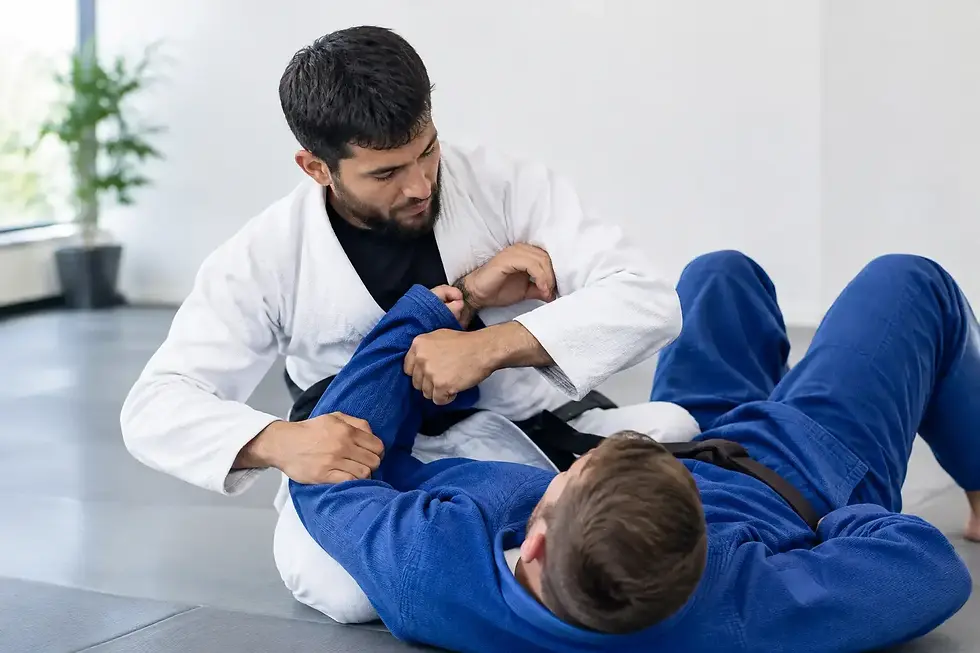
Grappling places a different demand on the body than steady-state endurance work. A five-minute round can include explosive scrambling, sustained isometric gripping, repeated takedown efforts, pressure from bad positions, and rapid recovery between exchanges. Add strength training and conditioning, and the athlete is constantly managing energy output alongside muscular damage and nervous-system fatigue.
MOTS-C has drawn attention because early research suggests it may influence cellular pathways involved in how the body handles fuel and responds to metabolic stress. The athlete-friendly interpretation is simple: better energy use could theoretically support work capacity and training consistency. That is the appeal behind many positive conversations in peptide communities.
The trade-off is that the leap from laboratory findings and early human research to a dependable performance edge for healthy BJJ athletes is large. There is not strong, sport-specific clinical evidence showing that MOTS-C makes grapplers recover faster, win more rounds, or build a deeper gas tank. Testimonials can be useful as personal experience, but they are not controlled evidence. Training load, sleep, nutrition, body weight, coaching, placebo effect, and other supplements can all change how an athlete feels.
What an athlete may be looking for
A serious competitor is rarely searching for one magic solution. More often, they want to preserve quality across a packed week: hard rounds on Monday, lifting Tuesday, positional work Wednesday, sparring Friday, and competition prep layered on top. If recovery is lagging, the first signs are familiar - weaker grips, flatter warm-ups, poor motivation, lingering soreness, and a cardio system that feels one step behind.
MOTS-C discussions usually center on perceived energy, endurance support, and improved body-composition management. Those goals make sense for weight-class athletes and high-volume grapplers. Still, perceived improvement should be evaluated honestly. If an athlete has recently cleaned up nutrition, increased carbohydrate intake around training, reduced alcohol, or finally slept eight hours, those variables deserve credit before a peptide gets all of it.
The evidence: promising biology, limited athlete certainty
MOTS-C is a naturally occurring peptide associated with mitochondrial signaling. Mitochondria are often described as the cell's energy-producing machinery, which explains why this category attracts endurance and recovery interest. Preclinical research has investigated its relationship with metabolic regulation, insulin sensitivity, exercise adaptation, and aging-related processes.
That research is worth watching. It does not yet provide a clear performance protocol for combat athletes, nor does it establish long-term safety for routine use by healthy adults. Human data remain limited compared with the confidence often seen in online marketing and locker-room conversation.
This distinction matters because grapplers are particularly vulnerable to overvaluing anything that promises more rounds with less fatigue. The culture rewards toughness, and a competitor who is already grinding through elbow pain, weight cuts, and two-a-day sessions may be tempted to treat a research peptide as a shortcut around a poorly managed program. It is not.
A smarter standard is to ask whether the foundation is already handled. Are calories sufficient for the workload? Is protein consistent? Are carbohydrates placed around demanding sessions? Is the athlete taking lighter weeks before fatigue becomes injury? Are persistent symptoms being assessed instead of ignored? Peptides cannot compensate for chronic under-fueling, reckless cutting, or a training plan with no recovery margin.
Recovery is more than soreness
A lack of soreness does not automatically mean readiness. In grappling, recovery includes grip strength, reaction time, sleep quality, mood, shoulder and knee stability, and the ability to make good decisions under fatigue. An athlete can feel less beat up yet still be under-recovered in ways that show up when the pace turns ugly.
That is why any evaluation should use more than a vague feeling after a few sessions. Keep an honest training log. Track round quality, resting heart rate trends if you already monitor them, sleep, body weight, mood, and how long it takes to feel normal after hard sparring. If an intervention is truly helping, the signal should be more meaningful than one great Saturday open mat.
Safety, product quality, and medical oversight
MOTS-C is not approved by the FDA as a medication for athletic performance or recovery. Research peptides also exist in a marketplace where labeling, purity, storage, and sterility can vary dramatically. A label alone is not a quality system.
Every-batch third-party laboratory testing and transparent purity documentation are meaningful standards to look for when assessing any peptide source. Even then, analytical testing does not turn a research compound into an approved treatment or remove individual health risk. It also does not replace consultation with a qualified licensed clinician who understands the athlete's history, medications, cardiovascular risk, metabolic health, and competition calendar.
Athletes should be especially careful about unexplained symptoms, prior endocrine or metabolic concerns, and stacking multiple compounds at once. Combining substances makes it harder to identify what is helping, what is causing side effects, and what may be creating an avoidable problem. Elite preparation is disciplined precisely because it reduces unnecessary variables.
The anti-doping question changes the decision
For tested athletes, the anti-doping issue can be more decisive than any possible recovery benefit. Rules can change, and substances that are not approved for human therapeutic use may create significant eligibility risk under sport anti-doping frameworks. Do not rely on a teammate's opinion, an old forum thread, or a seller's general statement about compliance.
Check the current rules for your organization, tournament, federation, and athletic commission before considering any compound. If you are subject to drug testing, assume that uncertainty itself is a competitive liability until you have verified the status through official channels. A medal, contract, or reputation is not worth gambling on a product category you have not fully investigated.
This is also where the needs of athletes split. A recreational adult who is not tested may focus primarily on medical risk and whether the evidence justifies the expense. A ranked competitor, collegiate wrestler, professional fighter, or athlete pursuing sanctioned events must add eligibility and possible consequences to the equation. Same peptide, very different decision.
Who should be most skeptical?
The athletes who need the biggest performance jump are often the ones who should slow down first. If your recovery is collapsing because you are training hard while dieting aggressively, sleeping five hours, and working a full-time job, the issue may be total stress rather than a missing compound. If joint pain changes your game, get it evaluated. If fatigue lasts for weeks, investigate it rather than normalizing it as warrior mentality.
Skepticism is not weakness. It is how a serious athlete protects a long training career. The best competitors are not the ones who chase every new edge. They are the ones who can separate a credible opportunity from a costly distraction.
For athletes who still want to explore MOTS-C with a clinician, bring real questions: What outcome am I trying to improve? What evidence supports that goal? What are the known and unknown risks? How will I measure whether it is working? What rules apply to my sport? Clear answers matter more than hype.
The mat rewards consistency over novelty. Build your conditioning, fuel the hard sessions, protect your joints, respect the recovery week, and make decisions that let you train with intent for years rather than just survive the next camp.


Comments